In most of the country, getting a chimney ready for winter is about cold. Here it is mostly about wind. The Santa Anas arrive from the north-east through autumn and into winter, they are dry, they are strong, and they do three specific things to a chimney that a cold snap never would.
One: they fill an open flue
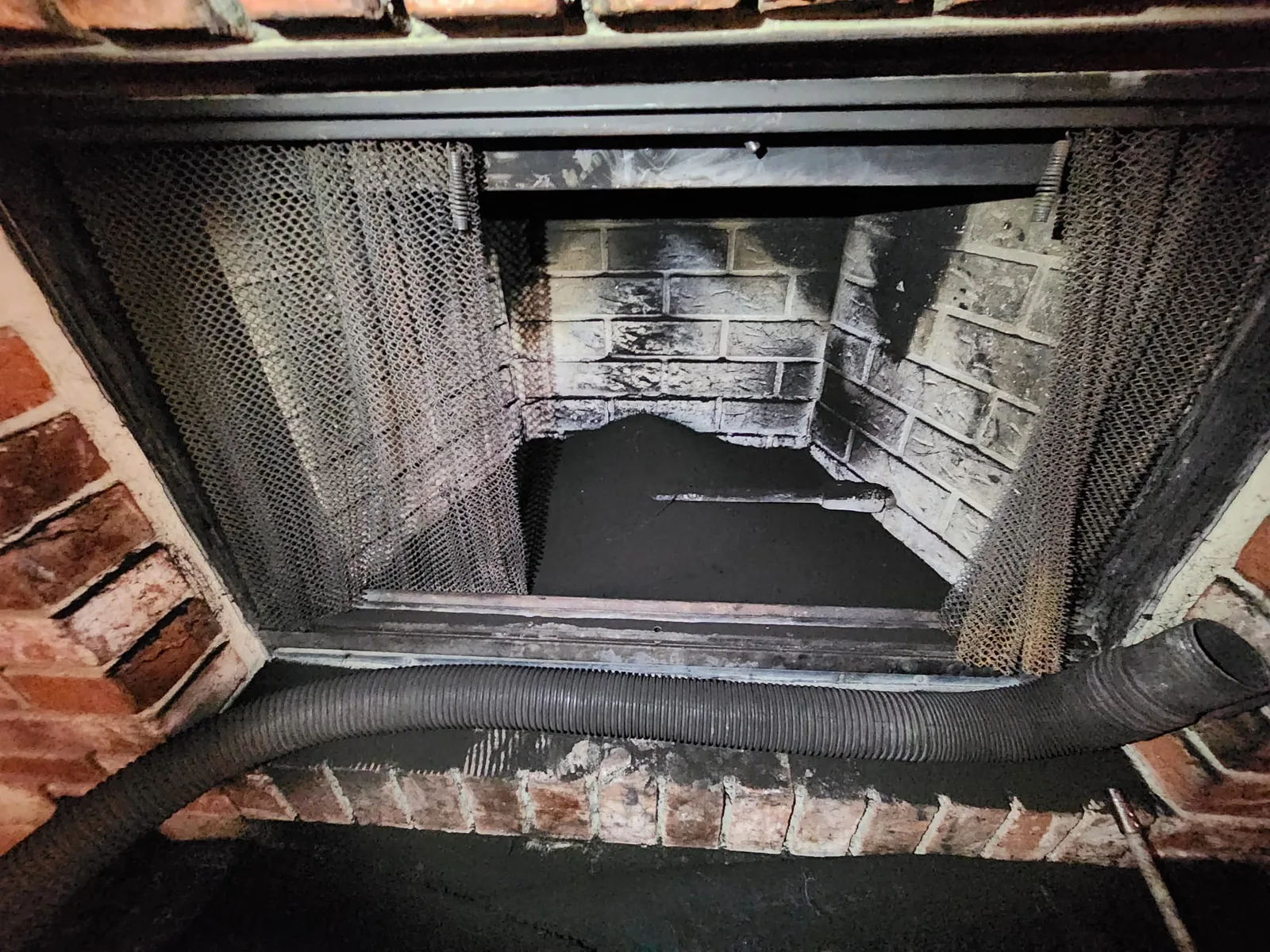
An uncapped chimney in the Valley collects an astonishing amount of material over a windy season — grit, leaf litter, seed pods, and whatever the neighbour's tree has shed. It gathers on the smoke shelf, which is exactly where you cannot see it. The first fire of the year then meets a partly obstructed flue, and the smoke comes into the room instead of going up.
This is the single most common reason we get called out on the first cold evening of the year, and it is completely preventable. A cap costs very little and it is the best-value thing you can fit to a chimney.
Two: they take caps and arrestors off
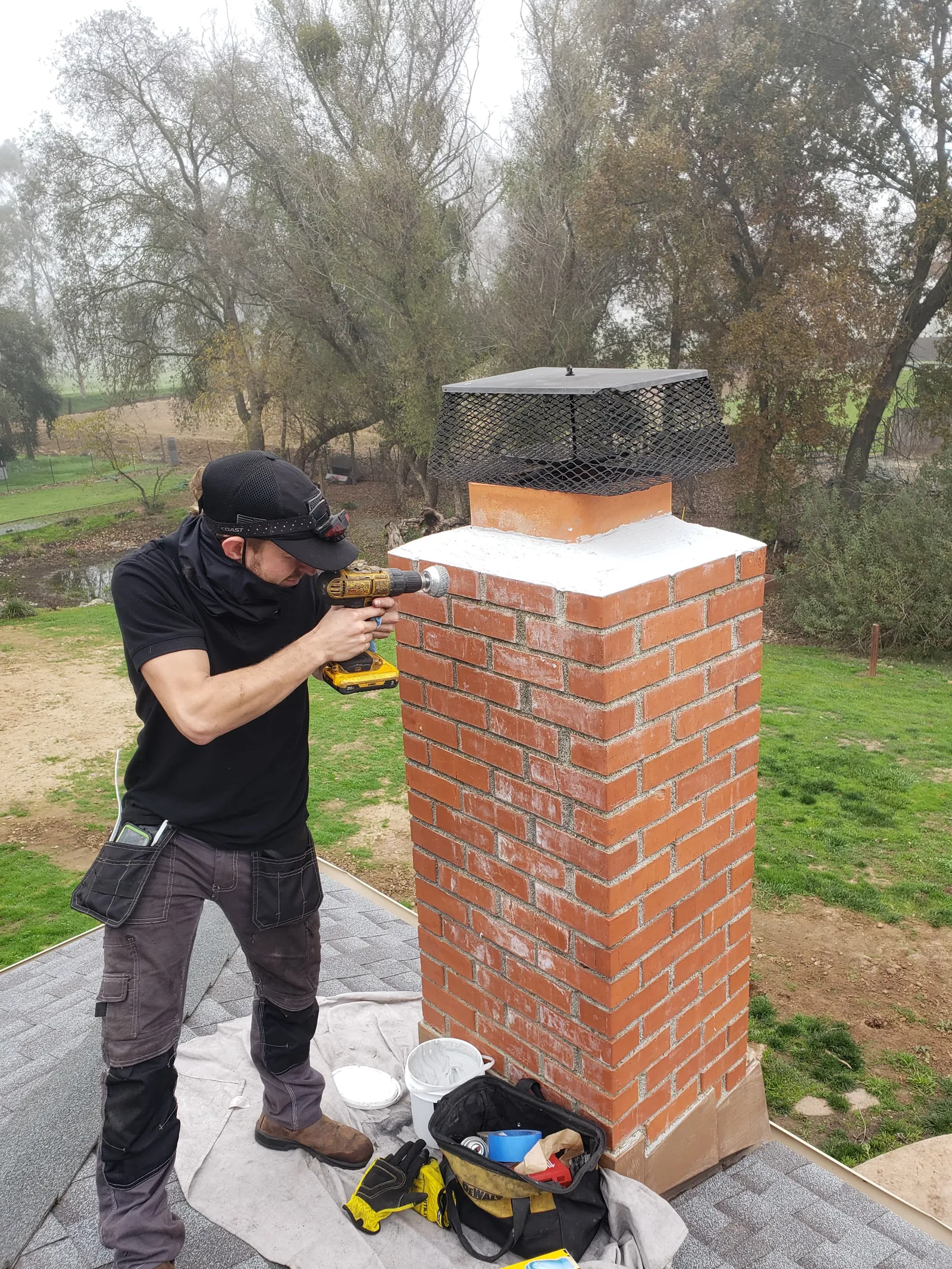
Strong wind is hard on rooftop metalwork, and we replace more storm-damaged caps in the western Valley — Woodland Hills, Canoga Park, West Hills — than anywhere else we cover. A cap that was fitted badly, or fitted a long time ago, will eventually lift. Sometimes it goes entirely; more often it shifts, leaving a gap that lets rain straight down onto the damper.
Worth checking after any significant wind event, and worth checking from the roof rather than from the driveway, because a displaced cap frequently looks fine from below.
Three: they turn an ember into a fire risk
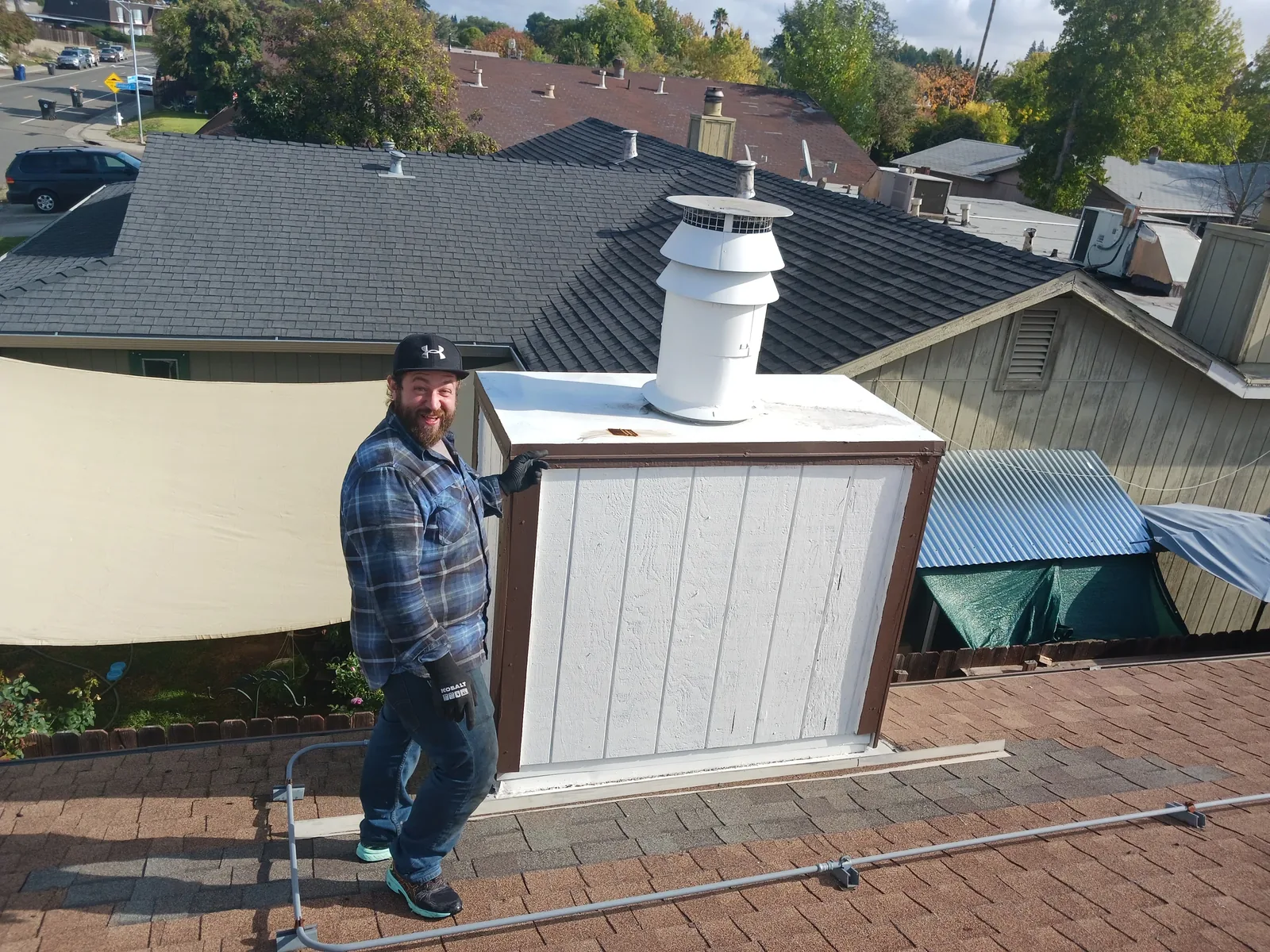
This is the serious one. Much of the ground rising out of the Valley — the Verdugos behind Burbank and Glendale, the Santa Susanas above Woodland Hills, the Santa Monicas along the southern edge — sits in a Very High Fire Hazard Severity Zone. A wood fire throws embers. A spark arrestor is what stops one landing on a hillside that has not burned in years, and it only works if its mesh is intact.
Arrestor mesh degrades in sun and heat. A corroded arrestor with holes in it is doing nothing at all while looking, from the ground, exactly like one that is doing its job. We check the mesh condition on every foothill visit as a matter of routine and we will tell you plainly if it has gone.
A short autumn checklist
- Book the annual sweep or inspection in September or October. Once the first genuinely cold night arrives the calendar fills within days, every year without fail.
- Have the cap and arrestor looked at from the roof, not assessed from the ground.
- Check the damper opens fully and seals shut. A damper seized part-open vents your heating all winter.
- Look at the crown for cracks before the rain arrives, not after the ceiling stains.
- Clear overhanging branches away from the stack.
- If you burn wood, make sure it is properly seasoned. Wet wood runs the flue cool and cool flues make the glazed creosote that cannot simply be brushed off.
Gas fireplaces are not exempt
People assume a gas unit needs nothing because there is no soot to prompt them. The venting still fouls, terminations still get blocked by the same wind-blown debris, burners drift out of adjustment, and the safety devices that shut the appliance down are themselves ageing. The failure is quieter than a wood fire's. That is not the same thing as safer.